
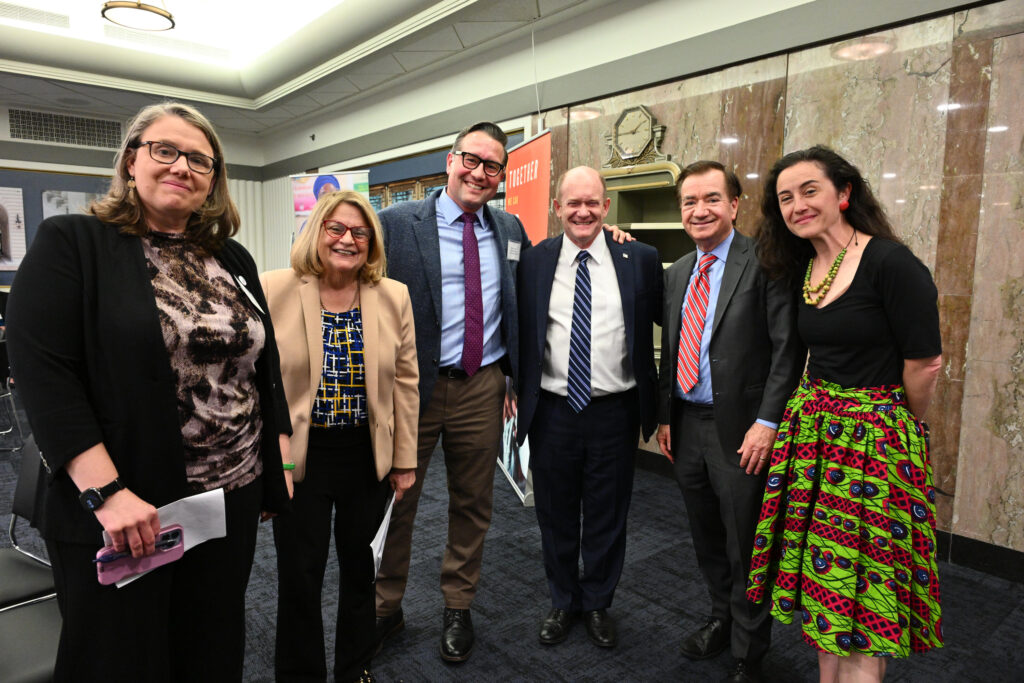
April 30, 2025 (Washington, DC) – Last night, leaders from Congress joined Malaria No More and members of the Malaria Roundtable for a reception to observe World Malaria Day. Malaria, a preventable and treatable disease, still kills nearly 600 thousand people each year, most of them children under five.
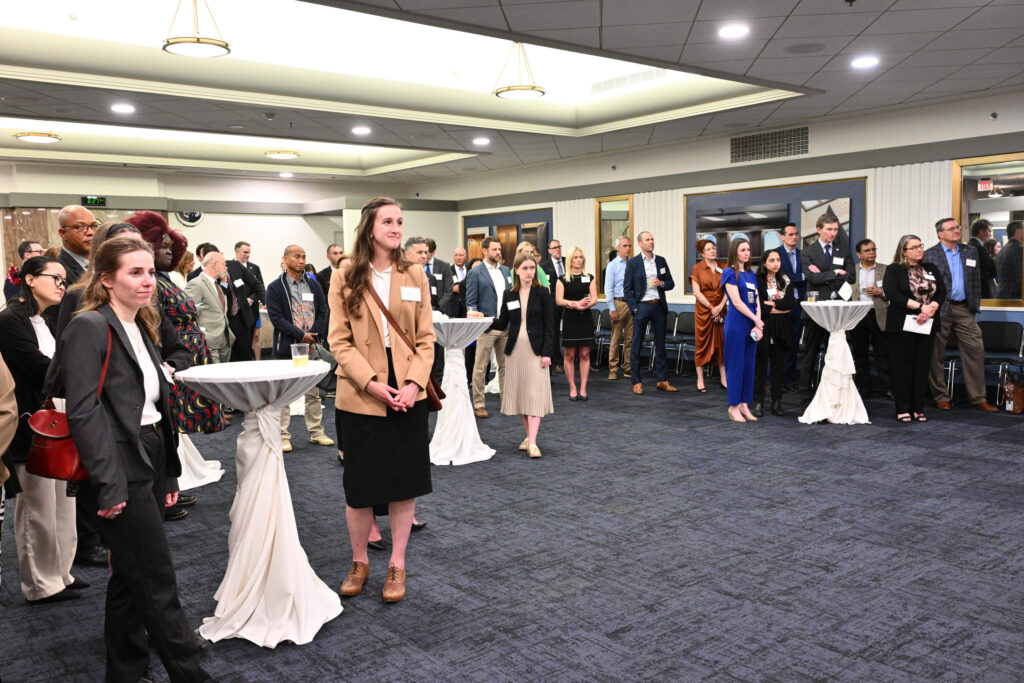
The reception brought together bipartisan members of Congress, global health leaders, and community advocates with an aim to catalyze action and call for continued investment in lifesaving malaria programs.
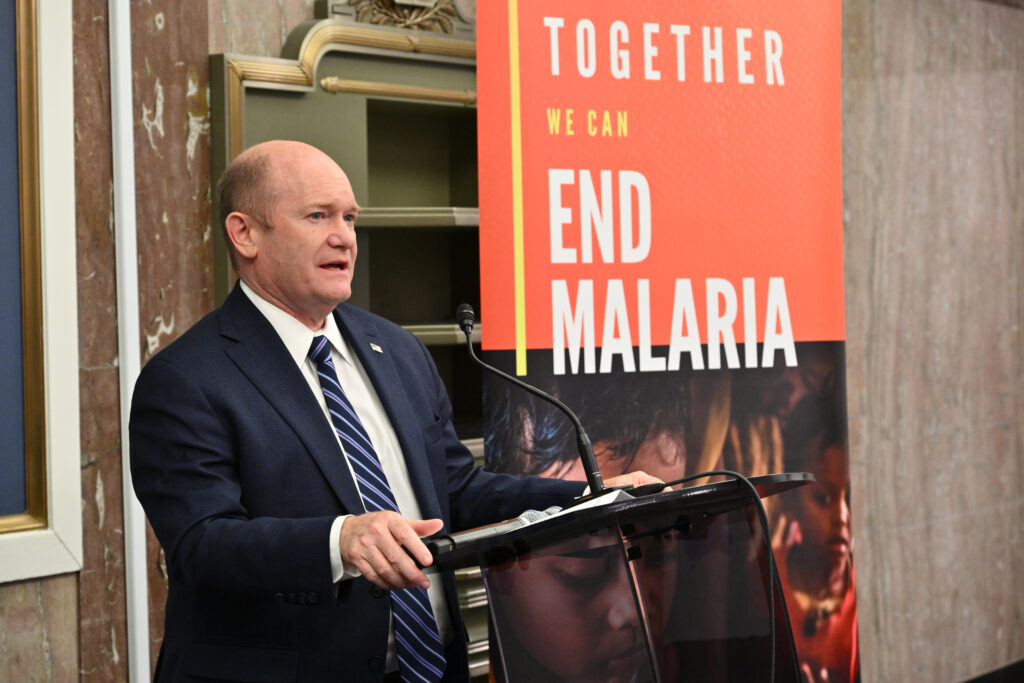
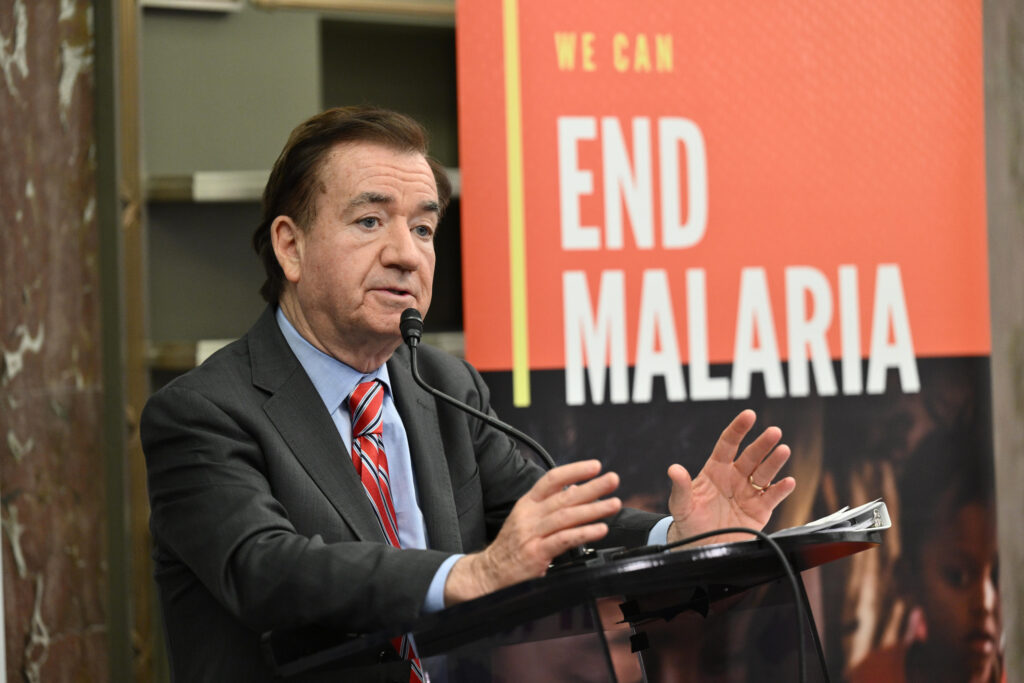
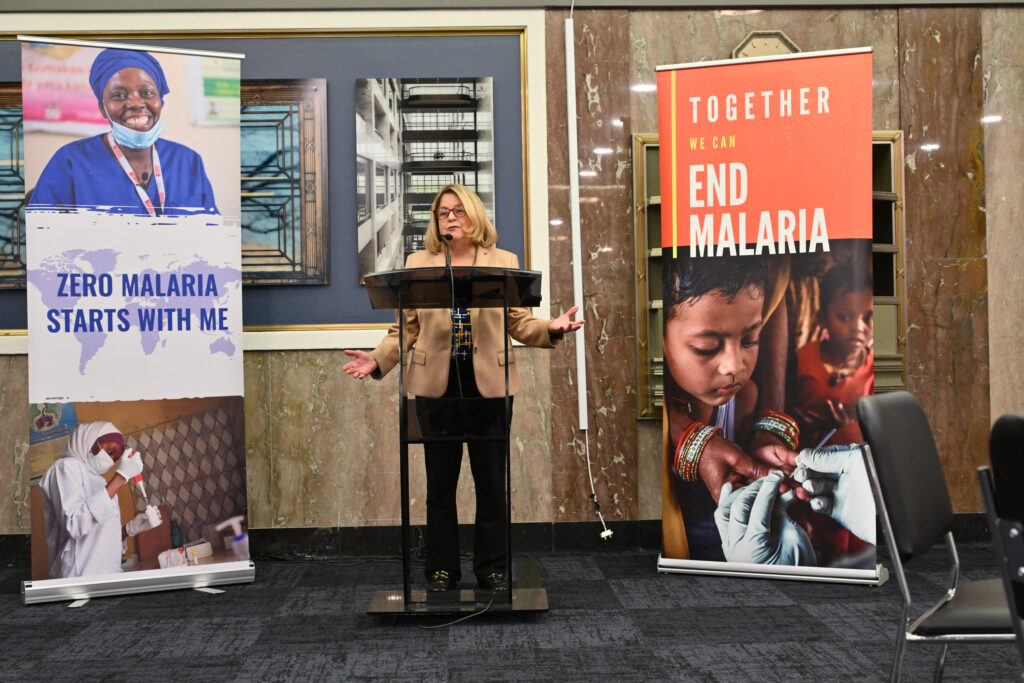
The program included remarks from Sen. Chris Coons (D-DE), former Rep. Ileana Ros-Lehtinen (R-FL) and former Rep. Ed Royce (R-CA).
“I know that malaria should be a bipartisan issue,” said Sen. Chris Coons (D-DE). “To those who’ve been a vital part of the work, whether here or around the world, thank you. The medical research that’s been done, the field work that’s been done, has saved millions of lives. It is worthy of sustained bipartisan support.”
“Investing in the fight against malaria is not just a humanitarian imperative – it’s a smart, cost-effective strategy that strengthens global health, economic stability, and our national security,” said former Rep. Ileana Ros-Lehtinen (R-FL). “America must continue to lead in this lifesaving effort.”
“Today, the world looks to the United States because we have the opportunity to shut malaria down once and for all,” said former Rep. Ed Royce (R-CA). “But to do it, we must stay focused on leading – not abdicating this responsibility.”
The United States has provided assistance to combat malaria in the most affected regions for over two decades. Thanks to U.S. leadership and global partnership, 2.2 billion cases of malaria and 12.7 million deaths have been averted since 2000. Additionally, a recent analysis by Oxford Economics Africa commissioned by Malaria No More, found that total U.S. malaria funding provided through the bilateral President’s Malaria Initiative and the U.S. contribution to the Global Fund over the past 20 years has produced a collective GDP increase of $90.3 billion in recipient countries, meaning for every dollar the U.S. invested in malaria control has generated 5.8 times the returns in economic benefits.
Speakers urged attendees to envision a future for U.S.-funded malaria programs that not only saves lives but makes America safer, stronger, and more prosperous.
“This is a moment that requires innovation and reinvention, and we have to embrace that as a malaria community,” said Martin Edlund, Malaria No More CEO. “Malaria is a winnable issue. Now is our moment to double down on U.S. commitment, but to do it in a smart, strategic, and innovative way.”
###
About Malaria No More
Malaria No More envisions a world where no one dies from a mosquito bite. Twenty years into our mission, our work has helped drive historic progress toward this goal. Now, we’re mobilizing the political commitment, funding, and innovation required to achieve one of the greatest humanitarian accomplishments of our time — ending malaria for good.