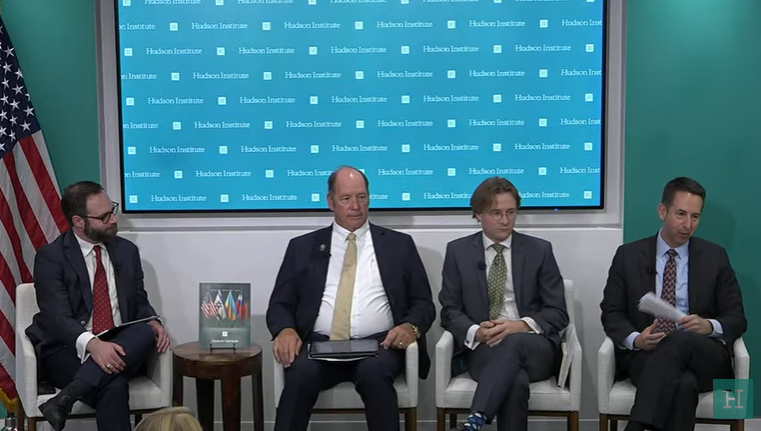
May 9, 2025 (Washington, DC) – The Hudson Institute, a Washington, D.C. think tank, hosted experts and policymakers on Thursday to discuss how America’s commitment to continue leading in global health—specifically in the fight against malaria—is more critical than ever. The panel discussion, entitled “Winning the Fight: How Ending Malaria Advances American Interests,” was facilitated by Hudson Senior Fellow Michael Sobolik, and included panelists Ken Staley, Former US Global Malaria Coordinator; Ted Yoho, Former United States Representative, Third District of Florida; and Arran Hope, Editor, China Brief, Jamestown Foundation.
Here is what we heard:
How have you viewed the role of foreign assistance in U.S. foreign policy and national security? Have you always been a believer in the value of foreign aid and the role that it plays for the United States?
“When I came to Congress, one of my rallying cries was to get rid of foreign aid. And when I got up here, I learned quickly how ignorant I was … it is a form of soft diplomacy that is so vital for us,” said Ted Yoho, Former United States Representative. “We need to make America safer, stronger, and more prosperous. These things are already doing that… And I don’t look at it as an expense. If it’s an efficient and effective program, I look at it as an investment.”
Why malaria? What makes this particular disease so unique and important to focus on and invest considerable resources in to combat?
“Malaria is one of the world’s oldest and deadliest diseases. It has killed hundreds of millions of people over the course of human history, and it still is a deadly disease for some of the poorest in the world. In sub-Saharan Africa, it still kills over a half million people a year. There are millions of cases every year. And that leads to significant societal and economic disruption. And that societal disruption really is a negative for the world,” said Ken Staley, Former US Global Malaria Coordinator. “Now, the great thing about what we can do about malaria is that there are treatments and preventions available, and not only are there treatments and preventions available, but they’re also very cost effective….The idea that we can eliminate this disease is real, and we can push forward with it with focus, and that would be an accomplishment on par with eliminating smallpox.”
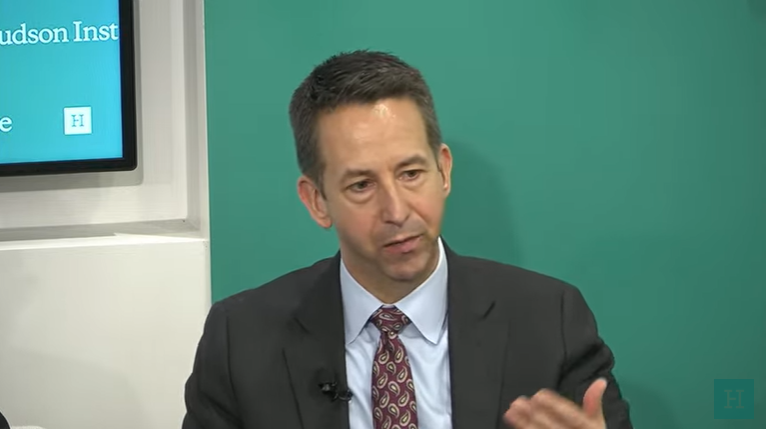
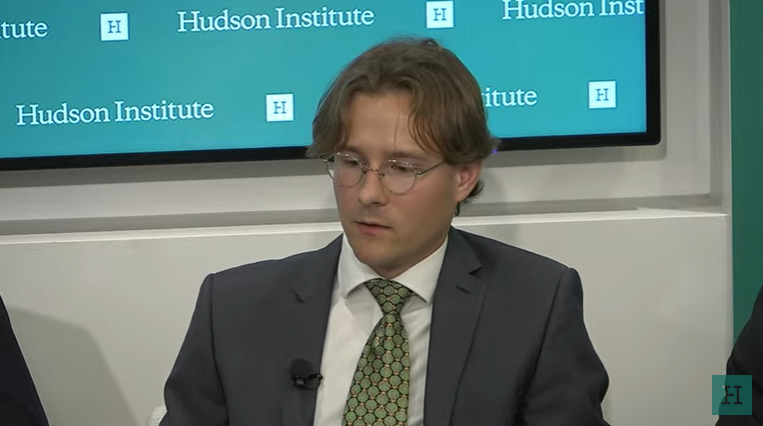
How does the People’s Republic of China view something like malaria? How does malaria fit into China’s global strategy with what it’s trying to accomplish and what it’s doing in Africa, specifically?
“China does not view aid in the same way that the West does,” said Arran Hope, Editor, China Brief, Jamestown Foundation. “It very much sees it as a win in its own interests…This is where the U.S. technical competition comes in … global public goods, public health, eradicating malaria are actually seen as another battleground by the party … They’ve capitalized on this.”
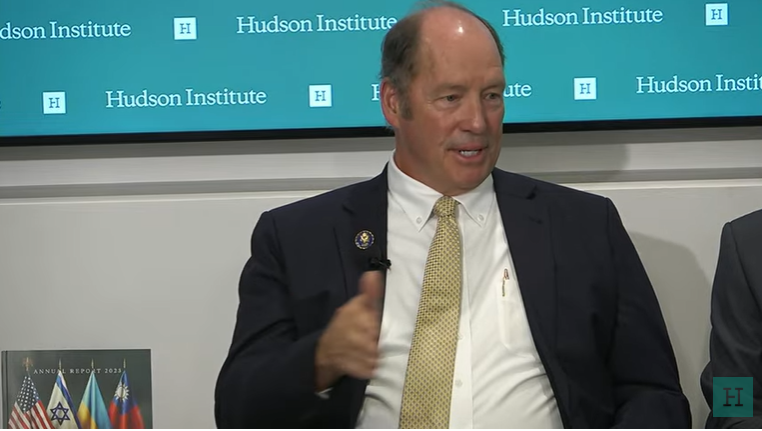
“This is a competition,” said Ted Yoho, Former United States Representative. “This is a game we can’t afford to back off.”
What was behind Secretary Rubio going out of his way to highlight malaria specifically [in his confirmation hearing]. Why does someone like Marco Rubio care about malaria?
“So, when you look at what’s occurred since we started this very concentrated [malaria] effort, we’ve saved over 13 million lives on the continent of Africa. We prevented 2 billion cases of malaria on the continent. And we’ve cut the death rate by half across all these countries in sub-Saharan Africa. So, we’ve been successful in this initial foreign aid mission,” said Ken Staley, Former US Global Malaria Coordinator. “But more than that, that success is a game changer for us when we speak to foreign officials. So when you speak to ambassadors who’ve served over in Africa and they speak to their counterparts, they know that we are helping them with a problem that we don’t have ourselves, that we’re doing this with goodwill and an openness that builds trust. And that builds opportunities to collaborate and form partnerships… but it has also had incredible benefits for our national security goals as well. And it doesn’t stop there. I think it’s also protected Americans at home.”
What changes or direction should the U.S. embrace in building a safer, stronger, more prosperous malaria initiative – that also has the foundation of trust? What does that look like?
“I would say it looks like taking advantage of the lessons we’ve learned in the past and when we created this, this last iteration of our malaria efforts,” said Ken Staley, Former US Global Malaria Coordinator. “And it also means adopting some of the newest technologies to accelerate our ability to assist these countries.
“[Trust] is imperative, I’ve learned. Whether it’s business where relationships or governments, people want to do business with people they know, like and trust. Once you break one of those, you weaken the whole thing,” said Staley. “Twenty-one years ago, when we were combating malaria, we had hundreds of people working on malaria around the globe, with many different people in charge of little pots of money. And when all is said and done, there was very little to show for it. So when [PMI] was created, the first principle was that there was a single person in government who had only one responsibility, and that was malaria control and eradication. And that person had a budget that they controlled, and they had line authority over all of the assets that were being deployed across different parts of the U.S. government. That resulted in a very effective ability to implement. On top of that, we put metrics in place to make sure that person and that organization measured themselves and were held accountable by the executive branch and the Congress in a very public way. So, I think we take that lesson of the leadership structure, and we make sure that we replicate that in the next iteration of what we’re doing.”
“We also have to make sure that we have an optimal level of funding to make a significant impact in the countries that we care about…. making sure that we have the right leadership structure and the right powers, making sure that we’re focusing our resources in the right way. Then the last thing I’d say is, just as we did 20 years ago, when we pushed the envelope on the technologies we were starting to apply, we need to go back and double down, ” said Staley. “I think there’s something else that’s worth pointing out here, as we’re talking about the influence of China. We have approached science with an openness and transparency that encourages data sharing and encourages cooperation. When you think about the way in which the Chinese operate in China and elsewhere in Africa and elsewhere, data is not open, data is not transparent, and we are flying blind. So, there’s a real reason that you want to have any early warning system in the hands of people who believe in that openness and transparency.”
Watch the full panel discussion here.
###
About Malaria No More
Malaria No More envisions a world where no one dies from a mosquito bite. Twenty years into our mission, our work has helped drive historic progress toward this goal. Now, we’re mobilizing the political commitment, funding, and innovation required to achieve one of the greatest humanitarian accomplishments of our time — ending malaria for good.