
Editor’s Note: This is part of a series of stories published by Malaria No More on behalf of the U.S. President’s Malaria Initiative (PMI) REACH Malaria Project, implemented by PATH. Penned in 2025, this story features Pandora Johnson, a laboratory technician in Monrovia, Liberia who regularly diagnoses patients with malaria.
Pandora Johnson, a laboratory technician, plays a crucial role in diagnosing patients at the John F. Kennedy Memorial Hospital in Liberia’s capital, Monrovia. She often tests patients presenting with symptoms that strongly suggest malaria, but interpreting those results can be difficult, and inaccurate testing and misdiagnosis can have severe consequences.
In malaria-endemic countries like Liberia, accurate and timely diagnosis is essential for effective, often lifesaving, treatment. For patients facing severe malaria, minutes matter for saving lives. Delays or errors in detecting malaria parasites due to inaccurate laboratory testing can lead to delayed care, improper treatment, worsening illness and serious health complications, increased drug resistance, and even death.
Despite the importance of accurate testing in ending preventable malaria deaths, for more than five years many laboratory professionals across Liberia did not receive updated training in malaria diagnosis due in part to limited funding for in-service training, the absence of structured national refresher programs for malaria diagnostics, COVID 19-related disruptions to health services, and other competing public health emergencies. As a result, frontline laboratory staff often relied on outdated techniques, which increase the risk of misdiagnosis, particularly in complex or severe malaria cases where survival depends on accurate diagnosis and timely treatment.
To address this gap, REACH Malaria project, with support from the U.S. government, partnered with Liberia’s National Malaria Control Program to deliver intensive, quality-focused malaria diagnostic refresher training for laboratory supervisors and technicians nationwide from October 27 to November 7, 2025.
Strengthening Diagnostic Skills is Essential to Patient Survival
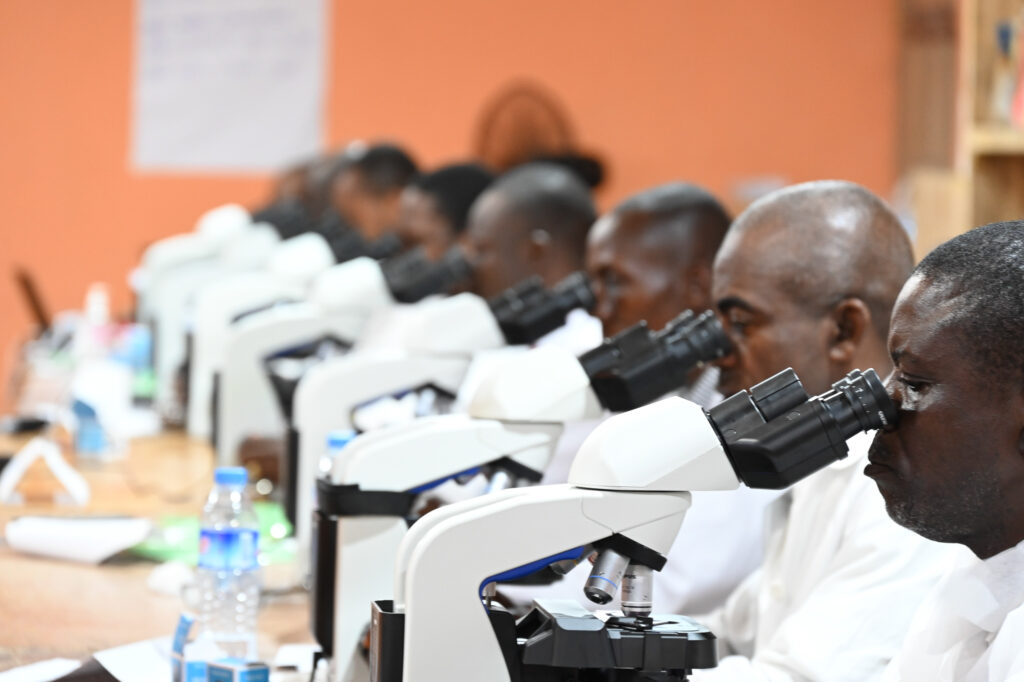
Evenly split across two cohorts, 40 participants completed a five-day training session designed to strengthen their expertise in malaria microscopy and rapid diagnostic tests. Each county in Liberia was represented by at least two trained laboratory professionals, ensuring nationwide coverage.
Through practical slide reading sessions, supervised demonstrations, group exercises, and pre- and post-training assessments, participants strengthened key competencies for effective case management, including their ability to:
- Detect malaria parasites accurately.
- Distinguish parasite species to guide correct treatment decisions.
- Quantify parasite density to assess disease severity and monitor recovery.
Before the training, many participants struggled to correctly identify malaria parasites and interpret test results, with average scores of just 31%, well below the level needed for effective case management. These are skills they rely on every day to provide full information to clinicians making treatment decisions for their patients. After five days of hands‑on practice and mentoring, participants more than doubled their testing accuracy, achieving an average score of 64%. Moreover, laboratory professionals reported feeling significantly more confident in their ability to identify parasites and accurately estimate parasite density.
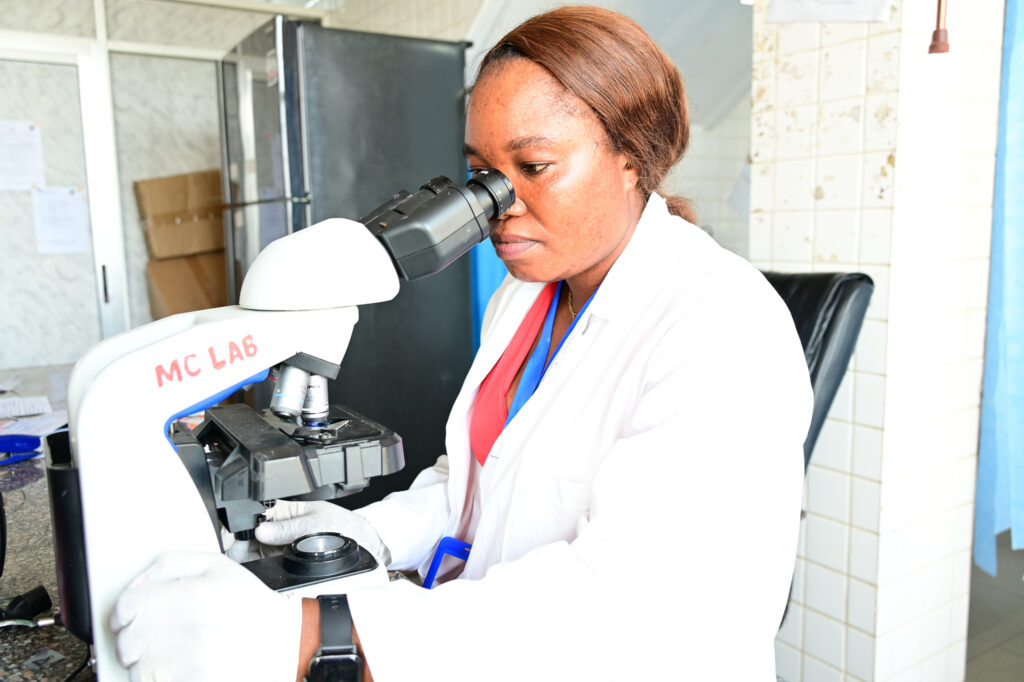
For Pandora, this training positively impacted how she could support care for patients in her hospital. During the training, hands-on mentoring and practical sessions strengthened her speed and accuracy in identifying malaria parasites and assessing parasite density. The renewed confidence was immediate.
“This training helped me understand how important my role is,” Pandora said. “Now I feel more confident identifying parasites correctly and helping doctors to treat patients better and faster.”
Better Skills Build Stronger Systems
Months after returning to her laboratory, that confidence translated into action. A child arrived at the facility with a high fever and severe symptoms. Using techniques reinforced during the training, Pandora quickly and accurately confirmed malaria and quantified the parasite levels, enabling clinicians to begin urgent treatment without delay. The child recovered.
Today, Pandora is sharing her knowledge with colleagues in her laboratory, promoting wider uptake of best practices and helping maintain diagnostic quality across the facility. By strengthening the skills of one professional technician, performance can improve across the entire laboratory and hundreds of patients can experience earlier treatment, stronger case management, and better health outcomes.
A Strategic Investment in Liberia’s Health Future
The benefits of this initiative go further than a single training event. It is a strategic investment in Liberia’s malaria response and health system. This newly trained group now provides mentorship, on site coaching, and quality assurance across laboratories nationwide. The cascade approach ensures that updated diagnostic standards are sustained and replicated throughout Liberia’s health system.
By equipping laboratory professionals with updated technical knowledge and supervisory skills, the project is strengthening national capacity to detect malaria quickly, treat it correctly, and save more lives from preventable malaria deaths across Liberia.
About Malaria No More
Malaria No More envisions a world where no one dies from a mosquito bite. Twenty years into our mission, our work has helped drive historic progress toward this goal. Now, we’re mobilizing the political commitment, funding, and innovation required to achieve one of the greatest humanitarian accomplishments of our time — ending malaria for good.