Editor’s Note: This is part of a series of stories published by Malaria No More on behalf of the U.S. President’s Malaria Initiative (PMI) REACH Malaria Project, implemented by PATH. Penned in November 2025, this story highlights how on-site mentorship and technical supportive supervision has improved one laboratory’s ability to quickly and accurately diagnose malaria in Kakamega County, Kenya.
Inside a well-lit laboratory at Khwisero Sub-County Hospital, a remote facility in southern Kakamega county in western Kenya, Ronald Otieno, a medical laboratory technologist (MLT) carefully pricks the finger of his young patient, collecting the single drop of blood that forms on the fingertip, while a quiet queue of adults with their children — some restless, others weak with fever — sit on a long concrete bench outside, patiently waiting for their turn. For the children in one of Kenya’s highest malaria burdened areas, where a delayed or incorrect diagnosis could mean the difference between timely treatment and rapid progression of life-threatening illness, a tiny drop of blood holds immense power. Within minutes, it will reveal whether the child is infected with malaria, guiding the urgent care that will follow.
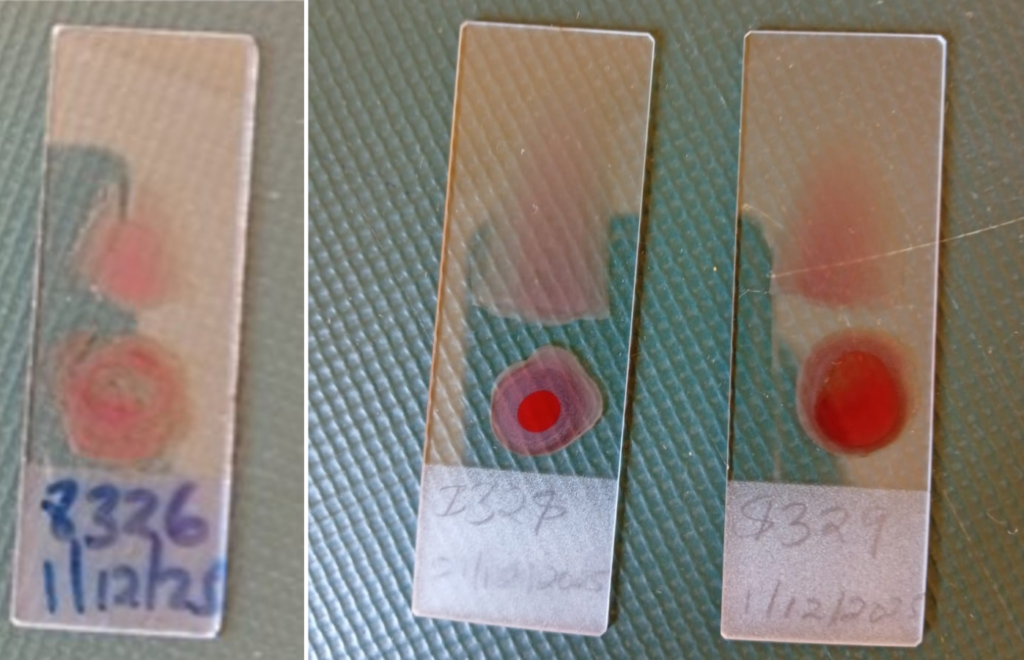
Accurate diagnosis is not just a technical requirement; it is a lifesaving necessity. One year ago, diagnosing infection in this way at Khwisero Sub-County Hospital carried far greater uncertainty. Although blood was drawn, the accuracy of the final diagnosis was not always guaranteed as slide preparation was inconsistent, staining techniques varied, and parasite identification and quantification depended heavily on routine practice rather than strict adherence to diagnostic standard procedures. Clinicians occasionally questioned the accuracy of the laboratory’s results, and the dedicated MLTs worked under pressure with limited opportunities for structured mentorship and quality assurance.
To strengthen accuracy of microscopy results, PMI REACH Malaria in Kenya, through funding from the U.S. Department of State, worked with the Kakamega County Department of Health to implement two rounds of on-site mentorship and technical supportive supervision (TSS) to five MLTs at Khwisero Sub-County Hospital, including instruction on correct slide preparation and identification and quantification of malaria parasites to reinforce adherence to the standard operating procedures.
The program also focused on strengthening quality assurance practices and identifying capacity gaps for targeted mentorship, leading to improved collaboration and better case management between laboratory teams and clinicians.
Following the TSS intervention, the facility has recorded marked improvements in the quality and reliability of malaria diagnosis. Microscopy accuracy improved significantly, reaching an impressive 100% rate of agreement when the slides prepared and read by the MLTs were rechecked by the country’s malaria quality assurance officer. This has in turn boosted the clinicians’ confidence in the laboratory results and markedly improved the facility’s adherence to its test-before-treat policy.
“I can confidently rely on the microscopy results from our laboratory,” says clinician Jackson Alukwe. “This helps me manage patients better, especially when they return with similar symptoms. We can rule out reinfection or suspected treatment failure and provide proper counselling on adherence.”
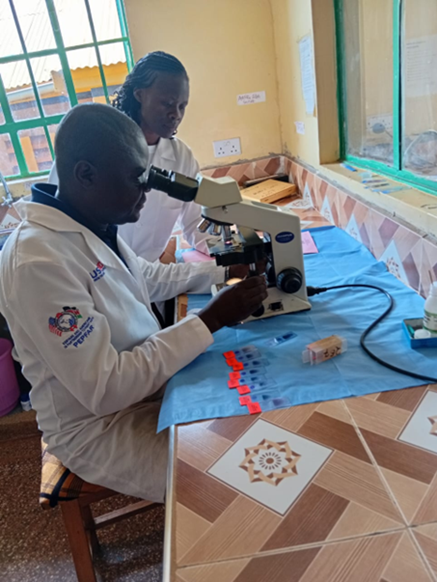
Back in the laboratory, Ronald Otieno carefully stains the child’s blood slide and places it under the microscope. Adjusting the focus with practiced ease, he scans the field methodically and confirms the diagnosis within minutes. The result is promptly communicated to the clinician, who begins treatment without delay. What started as a single drop of blood is now the first step toward recovery — made possible by accurate, timely diagnosis.
Reflecting on his transformation as one of the five MLTs mentored during the TSS intervention, Ronald said, “Before the PMI REACH Malaria supported mentorship, I worked from experience alone. Today, I work with confidence, precision, and adherence to the national diagnostic standards. Every patient I test now receives the right diagnosis at the right time.”
Khwisero Sub-County Hospital stands as a compelling example of how consistent and continuous technical supportive supervision can transform malaria diagnosis practices, restore clinical trust, and ultimately save lives. For every child whose tears accompany a small drop of blood in this laboratory, that drop now carries hope, accuracy, and a real chance for survival.
About Malaria No More
Malaria No More envisions a world where no one dies from a mosquito bite. Twenty years into our mission, our work has helped drive historic progress toward this goal. Now, we’re mobilizing the political commitment, funding, and innovation required to achieve one of the greatest humanitarian accomplishments of our time — ending malaria for good.