Editor’s Note: This is part of a series of stories published by Malaria No More on behalf of the U.S. President’s Malaria Initiative (PMI) REACH Malaria Project, implemented by PATH. Penned in June 2025, this story features Abednego Afreh, a volunteer supporting the Seasonal Malaria Chemoprevention (SMC) Campaign in Kajaji, Ghana.
During the rainy season in Ghana’s Bono East Region, the annual seasonal malaria chemoprevention (SMC) campaign offers lifesaving protection to thousands of young children. Over four months, young children receive monthly cycles of low dose preventive treatment to help protect them from malaria — one of the leading causes of death in children under five years of age. In 2025, the Bono East region aims to reach the Ghana Health Service’s goal of 105,946 eligible children with the SMC campaign.
Working in collaboration with Ghana’s National Malaria Elimination Program to support this goal, the PMI REACH Malaria project has trained over 10,000 community volunteers to deliver SMC in seven regions, including Bono East.
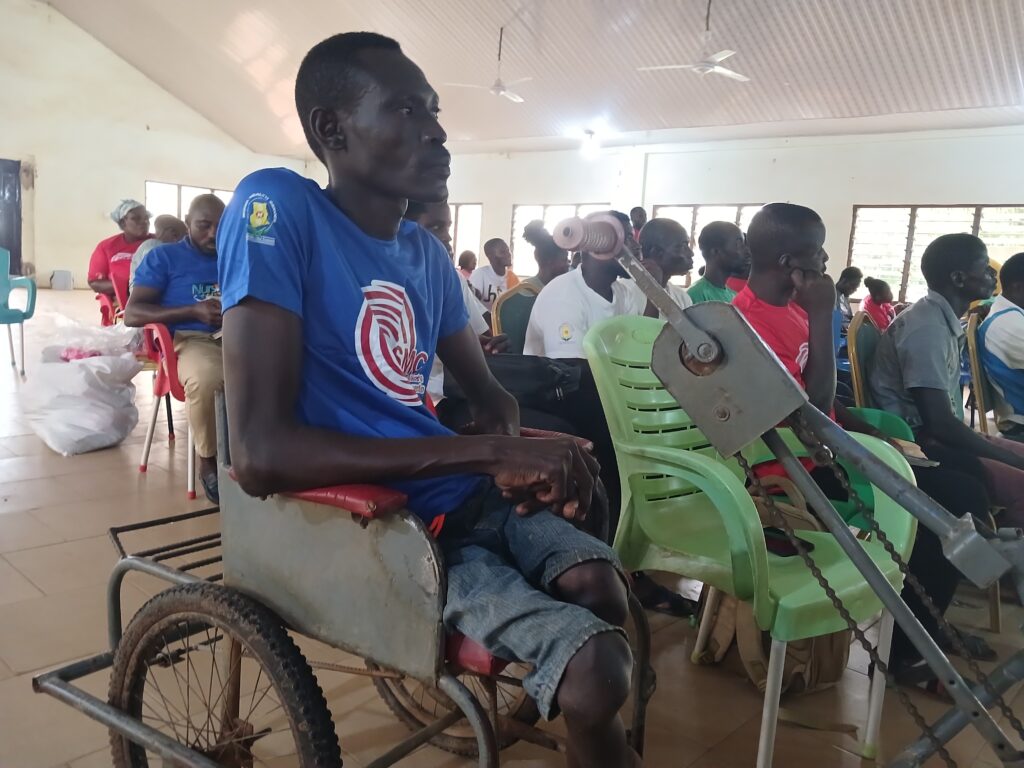
A respected voice in Kajaji, nestled in the Sene East district of Bono East region, Abednego Afreh volunteers with a unique approach to inspiring action in his community. Living with a physical disability, Abednego has turned his tricycle into a mobile health education unit, fitted with a megaphone to broadcast educational messages on health, including those about SMC.
“My tricycle is my everything,” Abednego says. “When SMC started here, I knew I could help. I make sure every household hears the message and is ready when volunteers arrive.”
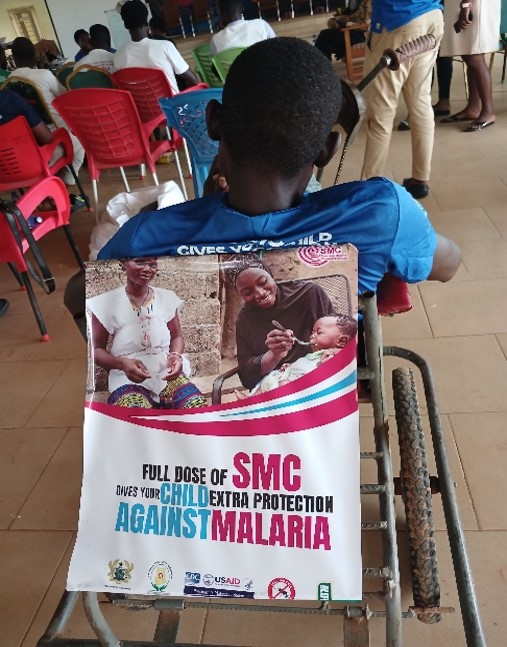
Photo: PATH/ Mark Kwame Ossom,
PMI REACH Malaria.
After participating in an SMC training in June 2025, Abednego credits the training with deepening his understanding of key messages and building his confidence when engaging caregivers. He identified two important takeaways from the training that have helped him more effectively address his community’s concerns:
- Children who experience side effects from SMC drugs receive treatment at no cost.
- Children who are already sick at the time of the SMC campaign should not receive preventive medication until they have recovered.
Armed with this knowledge, Abednego is better equipped to reassure hesitant caregivers and ensure that accurate information is shared throughout the community.
In addition to his mobile health announcements, Abednego engages caregivers directly, listening, answering questions, and encouraging them to have their children dosed. His warm and trusted presence has contributed to greater acceptance of SMC in Kajaji and increased adherence to the full SMC dose regimen.
He has also helped foster a more informed and supportive community. Paul Mensah-Letsyor, a Disease Control Officer at Kajaji in the Sene East District noted, “Abednego’s voice is one the community listens to. His dedication is helping reduce refusals and keep our children safe.”
Thanks in part to Abednego’s dedicated advocacy, 5,302 children in Kajaji received preventive treatment during the first SMC cycle this year.
Abednego’s story is a powerful reminder that everyone, regardless of physical ability, has a role to play in public health. Through determination, community trust, and inclusive action, he is helping protect Ghana’s most vulnerable children, one household at a time.
About Malaria No More
Malaria No More envisions a world where no one dies from a mosquito bite. Twenty years into our mission, our work has helped drive historic progress toward this goal. Now, we’re mobilizing the political commitment, funding, and innovation required to achieve one of the greatest humanitarian accomplishments of our time — ending malaria for good.