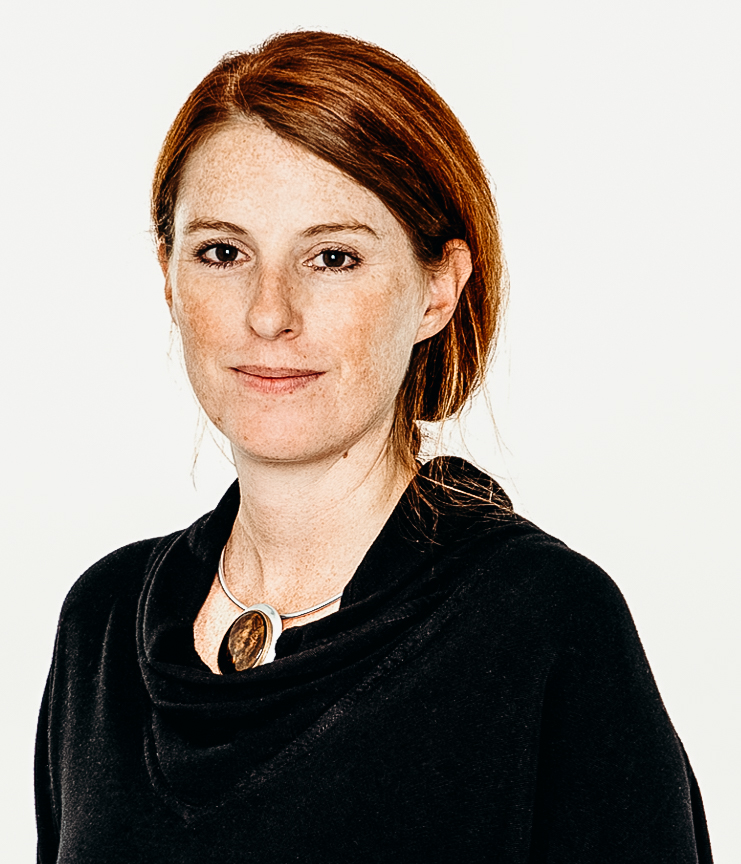
In a discussion with Malaria No More, Dr. Courtney Murdock, an Associate Professor at Cornell University’s Department of Entomology and lab lead in Cornell’s Murdock lab, discusses her work to address malaria, including how changes in climate, land use, and other environmental variables influence the transmission and control of mosquito-borne diseases.
Can you tell us about the work you are doing?
MURDOCK: As an ecologist, I study organisms, their environment, and how they interact with each other and their surroundings. A main driver of vector-borne disease transmission is the ecology of the insect vector. When there are changes in climate and land use, those alter ecological relationships that insect vectors have with their hosts and pathogens, and that’s when we start seeing shifts in transmission.
The research in our Murdock lab applies ecological and evolutionary theory to better understand the host-vector-pathogen interaction, key environmental drivers of transmission, and how environmental change will affect vector-borne disease transmission and control.
Over the past three decades, we have gained considerable insights into the mosquito proteins and cellular machinery mediating mosquito-pathogen interactions. Yet, we are just beginning to understand the complexity underlying mosquito-pathogen interactions. Mosquito infection is a dynamic phenotype, which is dependent upon both the specific mosquito-pathogen pairing, as well as in variation in key environmental factors. This is especially relevant for understanding how specific pathogens emerge, environmental conditions that favor emergence, and the biological constraints on the distributions of emerging mosquito-borne diseases.
For example, there is overwhelming evidence that temperature markedly affects diverse aspects of mosquito physiology, life history, and pathogen replication within the mosquito because mosquitoes are small, cold-blooded organisms. Yet, the extent to which temperature shapes transmission directly, through effects on pathogen biology, or indirectly, through effects on mosquito immunity and physiology, remain largely unexplored.
We currently have two ongoing projects that utilize RNA sequencing and bioinformatic analysis to identify panels of differentially expressed genes that are important in the physiological response of mosquitoes to temperature, to infection, and how temperature alters mosquito responses to infection in the yellow fever mosquito (Aedes aegypti) – Zika virus and the Anopheles stephensi malaria mosquito – human malaria (Plasmodium falciparum) systems. We also are initiating a new project exploring the effects of temperature variation on West Nile virus evolution in North American Culex spp.
You’re currently working in India. Can you tell us more about your latest project?
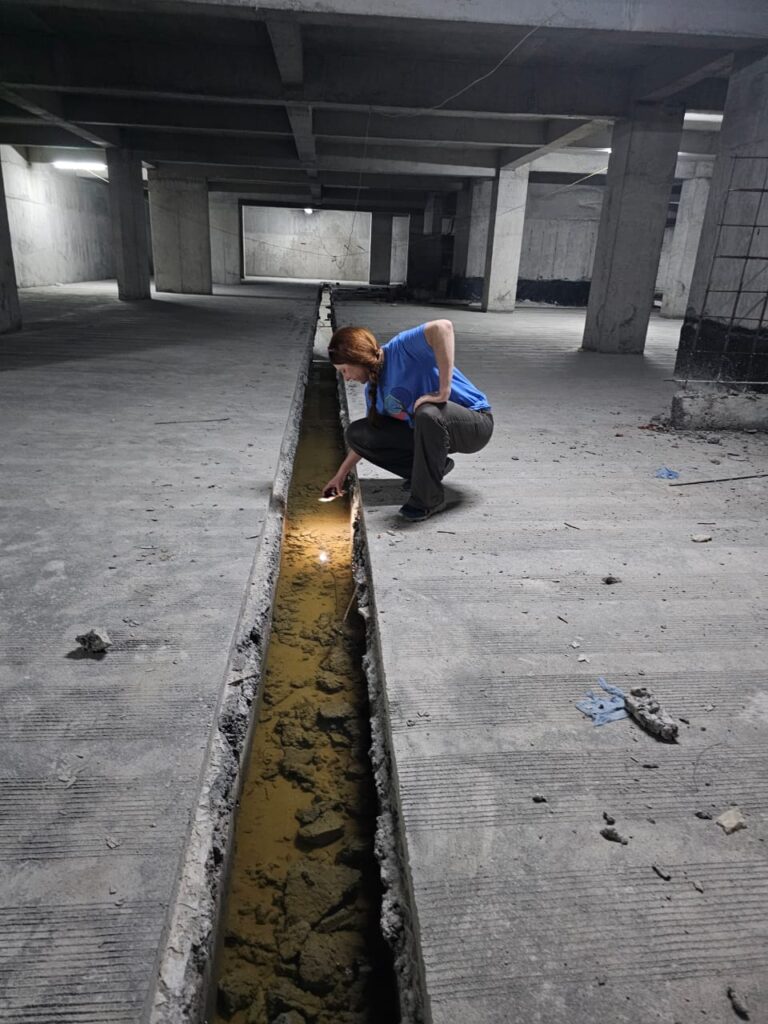
Yes, currently, I’m in India working on an urban malaria project. Urban malaria is a bit unique and has been understudied. But here in South Asia, Anopheles stephensi has caused large outbreaks of malaria in urban centers – which presents unique challenges to control.
We’re working on understanding the environmental drivers of mosquito borne disease transmission, especially in the context of changes in climate patterns and land use change – and how mosquito borne diseases might shift in the future. We’re looking at data driven models to predict those changes and respond proactively.
In India, however, malaria is nearing elimination, especially in cities, but my project is trying to understand the climate drivers of malaria transmission to see if it’s their surveillance control that’s contributing to the decline in malaria or if its climate driven, because the climate is becoming more hostile. It’s warming up here. Urban centers are experiencing very intense heat extremes during the pre-monsoon season, and I think that may be contributing to some of the declines in malaria. So, we’re trying to understand those dynamics.
We’re also trying to build models that are informed by data that come out of my lab to understand the relationships between temperature and relative humidity and how it impacts the vectors’ lifecycle. We’re combining that with data with what we’re collecting in the field on mosquito densities and cases. And we’re using this to formulate forecasting models that our partners here in two different cities can use in the future to target surveillance and control populations within the city that are most at risk. So, trying to get them over the elimination hump.
Can you tell us what your research has been able to achieve so far?
So far, the research I’ve been working on has demonstrated how key climate drivers shape the transmission process of malaria and arboviruses like dengue and Zika through effects on the mosquito life cycle. What’s next in my research program depends ultimately on the current funding landscape.
How did you get into this work and why is it important to you?
MURDOCK: I used to want to be a veterinarian and in undergrad I studied biology. But I was volunteering at a small animal vet to try to accumulate hours and quickly started to realize I was going to be bored in the role in 3 or 4 years.
So, the next summer, I spent a summer at the Biological Station in Northern Michigan and ended up falling in love with ecology. My mentor was a conservation biologist and disease ecologist, so I ended up getting my PhD in disease ecology. From there, I went to work in the Colorado Rockies with avian malaria and avian blood parasites. Birds have a lot of different blood parasites that infect them, like malaria. So, I was working on trying to understand transmission
I went and spent my undergrad at University of Michigan, and I went and spent a summer at the Biological Station in Northern Michigan with Pellston, Michigan and fell in love with ecology and also doing field ecology. So, I took general ecology and field numerology and just was like, okay, this is for me. And I took a year off and kind of thought about what kind of ecologist I wanted to be. My mentor was working at the University of Michigan, so I went back there for my PhD. He was a conservation biologist and a disease ecologist. I got a PhD in disease ecology then worked in the Colorado Rockies with avian malaria and avian blood parasites and a breeding population of birds. Because birds have a lot of different blood parasites that infect them, like malaria.
I was also part of an interdisciplinary NIH training program that wanted to train interdisciplinary scientists that studied infectious diseases. We were expected to have a field component, a molecular component, and a modeling component. And so, all of those things are built into my dissertation. And that’s kind of set the foundation for my current research program.
We ask questions about mosquito borne diseases and climate drivers, and we try to understand this in the context of mathematical models.
What about malaria interests you the most?
MURDOCK: Malaria is a really cool organism. It’s a parasite that sexually reproduces. It’s evolved with us, so our primate ancestors had malaria. It caused the downfall of civilizations. It also causes a lot of mortality and morbidity, and the people unfortunately most impacted are children under the age of five and pregnant women. It’s still a significant problem.
What will it take to end malaria?
To end malaria will require a continued and sustained global investment in funding to maintain current surveillance and control activities, but also to develop novel tools to help combat malaria. In addition, we need a better understanding of the climate sensitivity of malaria and how it interacts with ongoing control efforts, to better anticipate how climate change will affect transmission and the efficacy of our current and future interventions.
###
About Malaria No More
Malaria No More envisions a world where no one dies from a mosquito bite. Twenty years into our mission, our work has helped drive historic progress toward this goal. Now, we’re mobilizing the political commitment, funding, and innovation required to achieve one of the greatest humanitarian accomplishments of our time — ending malaria for good.