
A naturally occurring microorganism found across Africa, Microsporidia MB has been shown to block malaria transmission in infected mosquitoes in the field. We spoke to Dr. Syeda Tullu Bukhari, a Research Scientist at the International Centre of Insect Physiology and Ecology (icipe) in Nairobi, Kenya about where the research stands on Microsporidia MB — and where it could go next.
Tell us about your research. Why did you choose to focus on non-chemical forms of vector control?
I like this question. I did my PhD at Wageningen University & Research in The Netherlands, where the importance of protecting the environment was deeply ingrained across every field of study. That left a big impression, and I’ve been interested in nature-based solutions ever since.
My research has always focused on non-chemical vector control tools, because while there will always be a place for insecticides, their lifespan is inherently limited. Mosquitoes have been around a lot longer than humans, and they will always figure out a way around whatever we throw at them. Resistance is already there against insecticide-based tools, especially against pyrethroids which are also used in agriculture, so effective insecticide management is beyond just public health.
And with climate change, vectors are spreading to new areas. Although not entirely due to climate change, we now have Anopheles stephensi in Africa, an invasive mosquito from Asia that carries malaria. Anopheles stephensi mosquitoes have carried genes that make them resistant to the insecticides used in conventional tools like bed nets.
And when we go out into communities and talk to people, we find that they can’t be under bed nets as much as they should be to prevent bites. A lot of the time that’s because they need to make a living; they have to work in the field or sell at the market late into the evening. There’s more evidence now pointing toward increasing physiological and behavioral resistance, so there is a need for new tools.
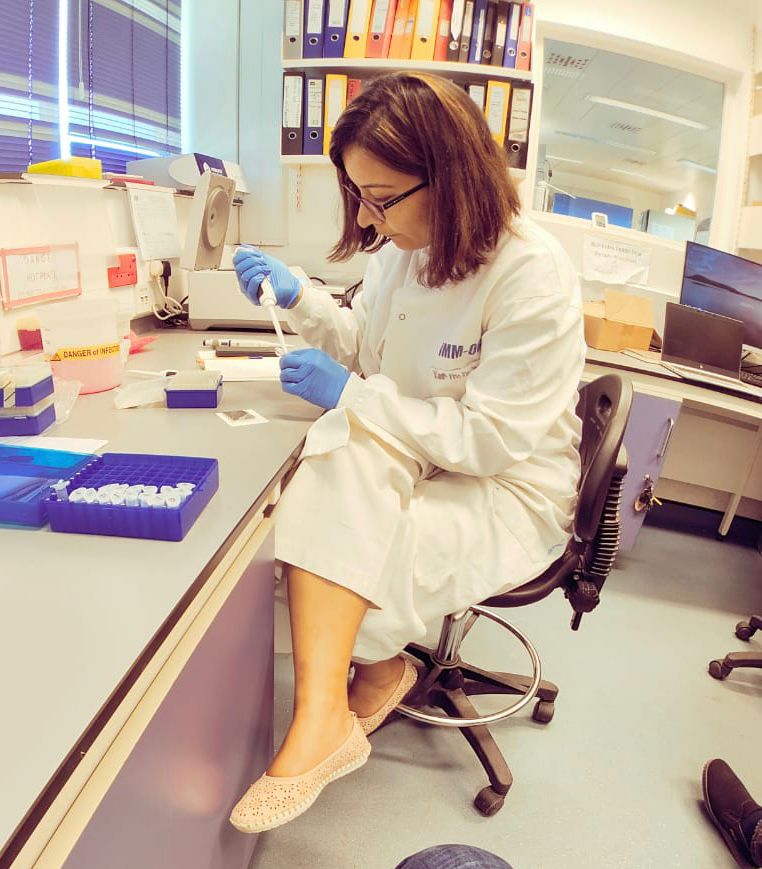
What new vector control tools are you currently working on at icipe?
Microsporidia MB was discovered by Dr. Jeremy Herren, a scientist at icipe; it’s a natural microorganism found in the Anopheles mosquito population that prevents an infected mosquito from transmitting malaria. It doesn’t harm the mosquito, and it spreads on its own, which reduces selection pressure making it unlikely that mosquitoes will develop resistance. It’s exciting because aside from vaccines, no other transmission blocking tool has been shown to block malaria transmission in the field.
Where are you in the research process and how do you foresee Microsporidia MB being deployed for malaria control?
We’re currently in Phase II, working toward Phase III trials. Right now, we’re really trying to understand how Microsporidia MB spreads in the environment — what helps it to proliferate and spread, and how can we increase that?
We currently have three scenarios in mind. The first is that it spreads during mating and from mother to offspring. That would mean rearing infected mosquitoes in the lab and releasing them into the environment. Another approach looks at climatic factors like temperature and humidity. Once we identify the optimal conditions, we could try to create a kind of environmental oasis for Microsporidia MB to infect mosquitoes. And finally, we are looking at spores. Although Microsporidia MB is not a fungus, it’s similar enough that it does produce spores. I think this is the most likely scenario and would see us disseminate spores in natural mosquito breeding sites.
We know that Microsporidia MB is already quite widespread in the environment. In the last few years it has been found in several countries with varying climates across Africa — from Ethiopia to Niger and Burkina Faso. Our job now is to boost it as much as we can.


What are the biggest barriers to scaling this potential new tool?
Microsporidia MB was only discovered in 2020. Also to highlight is that this is only a placeholder name. We’re still in the process of securing a scientific name. You could say we’re the new kid in school. But we want to apply lessons learned from previous tools and technologies to hopefully do things more efficiently. For example, we know that community acceptance can be a challenge, so we started engaging with communities right away. We’re already talking to regulators, too. We’re doing things synchronously rather than step-by-step to speed up the process.
How far away are we from seeing widespread use of Microsporidia MB?
Microsporidia MB is very promising, but developing new vector control tools is not something that you can do in a couple of years. Typically, it takes at least 25 to 30 years to fully develop and deploy a new tool. But the good news is that we are getting more efficient. With better technology and artificial intelligence, we can move faster than ever before. But it will still take about six to eight years to see this through.
That’s why consistent funding is so important. If I could impress anything upon policymakers, it would be the importance of investing in malaria R&D. Because malaria is more than a health problem. It has a lot of economic implications. Between missing work and paying for treatment, one bout of malaria can mean a family can’t pay school fees or buy enough food. Ultimately, failing to control malaria will cost the global economy billions by 2030.
That’s why investing in malaria R&D is so important, and why icipe is committed to training the next generation of African researchers — ensuring African scientists are leading the way toward malaria elimination on the Continent.

About Malaria No More
Malaria No More envisions a world where no one dies from a mosquito bite. Twenty years into our mission, our work has helped drive historic progress toward this goal. Now, we’re mobilizing the political commitment, funding, and innovation required to achieve one of the greatest humanitarian accomplishments of our time — ending malaria for good.