
Drawing on two decades of experience in public health emergencies, Ida Marie Ameda now works at the confluence of malaria and emergency as UNICEF’s Global Technical Lead for Malaria and Neglected Tropical Diseases (NTDs) in Nairobi, Kenya. We spoke with Ida Marie about the impact of conflict and displacement on malaria elimination efforts, and why prioritizing refugees and displaced communities is key to ending the disease for good.
What trends are you seeing in malaria endemic countries?
We’ve seen a massive reduction in malaria-related deaths in the past 10 to 15 years, and that’s impressive, but we’re also seeing cases rise in some malaria endemic countries.
Ethiopia, for example, was reporting less than one million cases a year in 2019. There were about 10 million cases reported in 2024 — and we know that’s a conservative estimate. Several areas experiencing conflict did not report accurately, so the real case load is much higher. That’s a huge reversal and a really worrying trend.
Many endemic countries, like Ethiopia, are experiencing conflict in some capacity. What’s the connection between malaria and conflict?
It’s not a coincidence that almost all of the 11 highest burden countries have some degree of conflict or instability. And with conflict comes displacement.
Most people who are forced to leave their homes think they will be back within a year, maybe two, but the International Organization for Migration (IOM) found that, on average, people are displaced for at least 10 years. As conflicts have increased, and become increasingly protracted, more people are being displaced, leading to disruptions in health programming.
Think about a family living in their home. They sleep under bed nets at night. They have access to a local health clinic where they receive regular care. Pregnant women and children, those at highest risk of malaria, take preventative medication seasonally and during pregnancy. If someone in the home spikes a fever, they can take a rapid test and start treatment right away.
Now imagine that family is forced to flee their home. Most people will be on the move for a while. They may not have shelter for a bit, and if they do, it may be haphazardly built in a way that is not conducive to vector control. They may not have a bed net anymore, and if they do, they may not be able to hang it properly.
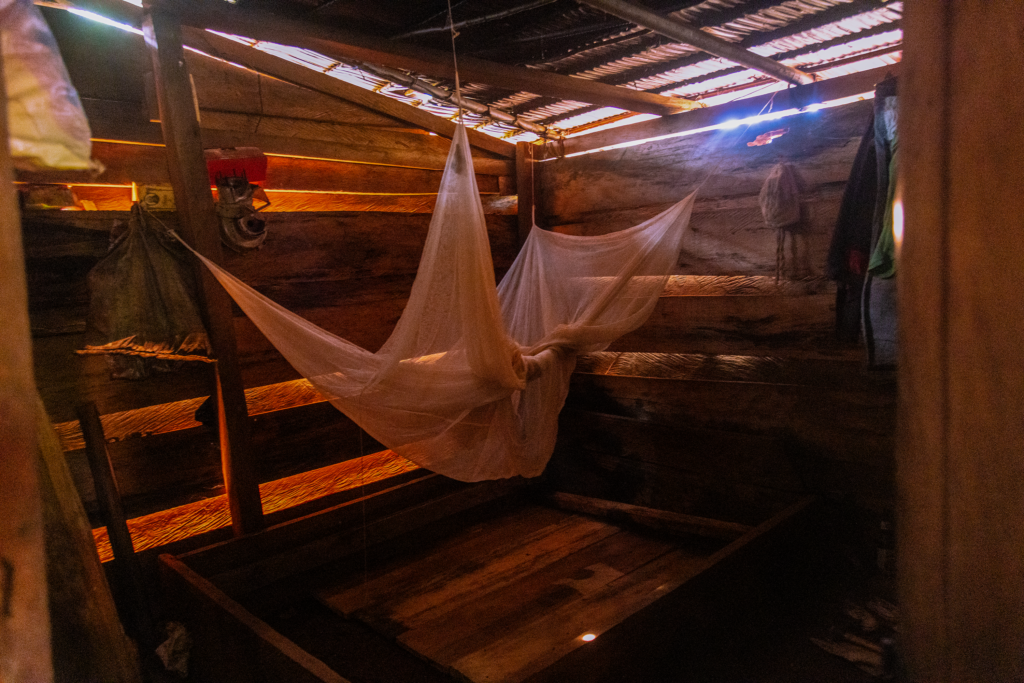
Then you have communication and behavior-related challenges. Picture a mom coming from the Democratic Republic of the Congo into Uganda. This is quite typical. She doesn’t speak English, if you’re lucky, she speaks French or Swahili and encounters a health worker who can speak with her. But that doesn’t always happen. So even when there is access to care, there’s a very real language barrier. That’s why it’s so important for governments and ministries of health to work together across borders — sharing information on disease burden and transmission with neighboring countries, while also developing messages and communications materials in multiple languages.
Then there are norms, which we don’t speak about enough. We need to understand where people are coming from and what the norm is for them. They’re coming from all kinds of places and situations; they may have issues with trust. We need to meet them at their point of need in a non-judgmental way.
What else puts displaced populations at increased risk of malaria?
Beyond malaria tools and programs, there are other factors at play that also make displaced populations susceptible to malaria. As people move, they pass through areas with varying degrees of malaria transmission. That becomes dangerous when people from places with low rates of malaria enter a high transmission area; they may lack the knowledge or tools to protect themselves, and on top of that, if they haven’t been exposed their immune systems are weaker.
For me, that is one of the primary risks facing displaced persons, coupled with food insecurity. People who are hungry will almost always get everything that’s going around — malaria, diarrhea, pneumonia, whatever is passing by — because their immune system is impacted by poor nutrition. And then there’s overcrowding in some settlements, there’s poor environmental management which is conducive for vector proliferation.
All of this makes them more susceptible to severe malaria, which requires a higher-level of care. One of the biggest problems is access to blood, safe blood, because severe malaria can lead to severe anemia and require transfusions. Some people also require oxygen. This kind of care is only available at a referral-level hospital, which are not always available in displacement settings.
Given your work with UNICEF, can you unpack how this impacts children, specifically?
Let’s start in pregnancy because it’s a continuum. When pregnant women in endemic settings do not take presumptive treatment for malaria, their children are at risk. They will not have maternal antibodies to protect them in the fragile first six months of life.
And if they haven’t taken presumptive treatment for malaria, they could contract malaria and pass it on to their baby. Malaria in pregnancy increases the risk of miscarriage, severe anemia, severe birth outcomes — the whole lot of it.
The risk is really, really high for children between the age of six months and two years. They’re no longer protected by maternal antibodies, they’re developing their own immune systems, and then they reach the age where they put everything in their mouths. They pick up other infections, like bouts of diarrhea, which lowers their immunity and leaves them open to other infections. It’s a vicious little cycle.
We know that malaria is the leading cause of death for children in Africa, responsible for over 17% of all under-five deaths. But when you factor in other causes like diarrhea and respiratory infections like pneumonia — two leading causes — the potential cumulative toll is even higher.
What’s working? What interventions are making a difference when it comes to controlling malaria among displaced populations?
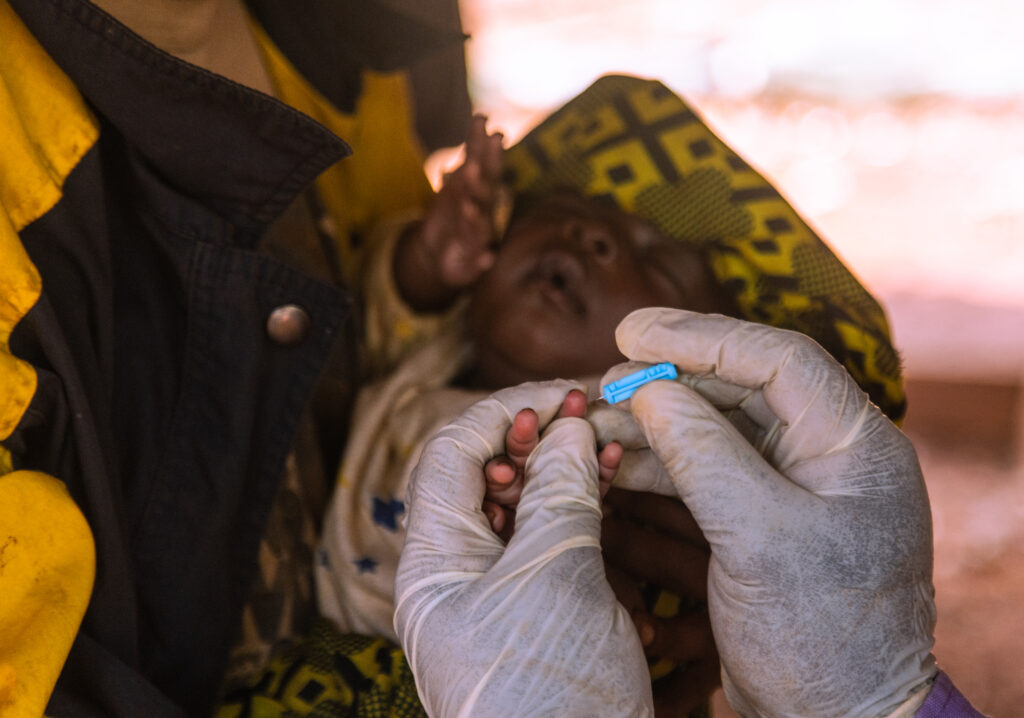
We have tools for malaria prevention, diagnosis, and treatment, but they only work if they reach displaced populations.
In Sudan, for example, UNICEF supported a mass distribution campaign for insecticide treated nets, or ITNs, in conflict-affected states. It required coordination at every level to pull off – from the national level to the state, administrative, and district levels. The first step was conducting household surveys to determine how many nets were needed and then working with partners to get the nets as close to the communities as possible. In some cases, we had to wait for the situation to stabilize before we could complete last mile distribution. With the security situation evolving every day, it was a logistical nightmare, but the campaign was remarkably successful: Every household received an ITN.
There’s also an interesting success story out of Burkina Faso. As the security situation deteriorated, the government invested in their community health workforce. They hired, trained, and equipped health workers in problematic areas — and they’re having an impact. While still too high, mortality rates for children under five are coming down. Ethiopia has also made an enormous effort to reach affected communities — including many in conflict settings — with malaria outbreak response interventions, funded by the Ethiopian government and partners.
It’s a great reminder that when we talk about strengthening health systems, we cannot forget about the role of community health workers. In so many places, especially in displaced settings, they are the only point of care. They have a bird’s eye view of everything going on in their community, and they are the first call for a mom with a sick baby. They provide immediate care to stabilize the child and, if needed, help the mother access the next level of care. Investing in community health workers is one of the best investments governments can make in managing diseases like malaria.
What do you want people to know about malaria and displacement?
We cannot forget about displaced populations in malaria endemic countries. No matter how good our malaria programs are we simply will not progress toward elimination unless we address malaria in these settings.
We cannot speak about elimination without addressing malaria in all contexts — including among refugees and displaced communities.
About Malaria No More
Malaria No More envisions a world where no one dies from a mosquito bite. Twenty years into our mission, our work has helped drive historic progress toward this goal. Now, we’re mobilizing the political commitment, funding, and innovation required to achieve one of the greatest humanitarian accomplishments of our time — ending malaria for good.