Editor’s Note: This is part of a series of stories published by Malaria No More on behalf of the U.S. President’s Malaria Initiative (PMI) REACH Malaria Project, implemented by PATH. Penned in November 2025, this story features Dr. Mike Odhiambo, who is improving care for severe malaria at rural hospitals in Kenya’s western lake zone.
For patients suffering from severe malaria, health facilities offering inpatient services are the most critical point of care. Clinical staff in these facilities provide lifesaving interventions and their competence directly determines the outcome of severe malaria treatment. In many high-burden settings, including the malaria endemic lake zone in western Kenya, persistent gaps in early diagnosis, referral practices, and adherence to treatment protocols continue to compromise patient outcomes. In Busia County, where malaria prevalence reaches nearly 40%, strong clinical leadership in the treatment of severe malaria is a matter of lifesaving importance.
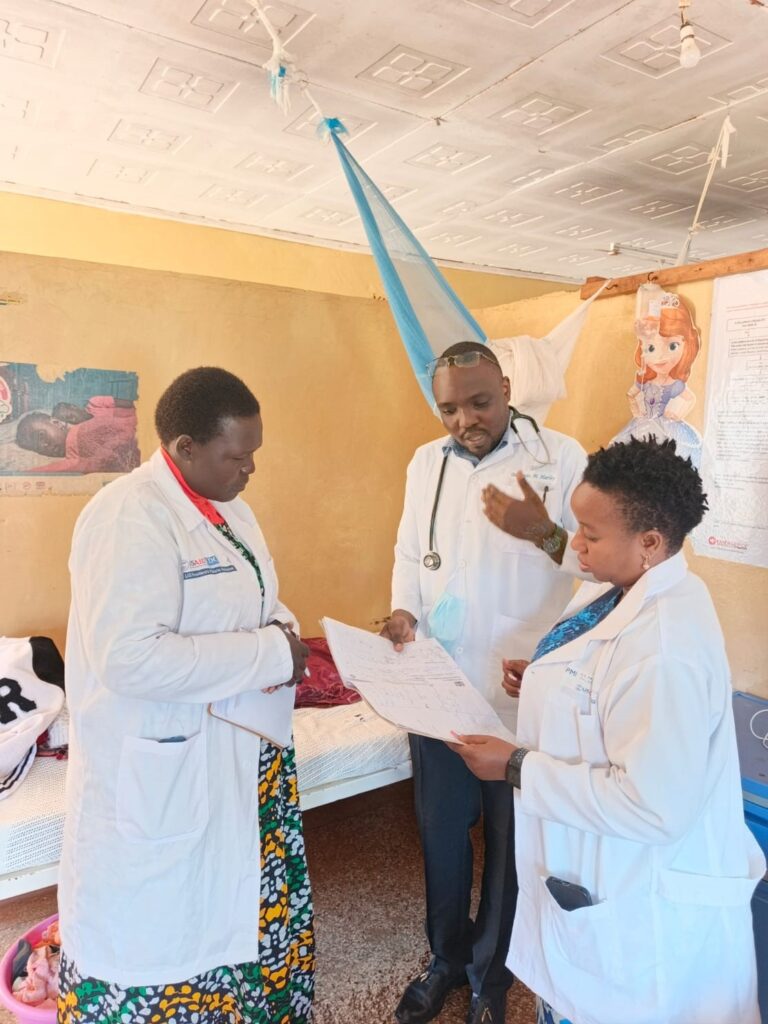
From September 16-20, 2024, the PMI REACH Malaria Project in Kenya, through funding from the U.S. Department of State, supported a 5-day bedside training of 24 clinical staff from the eight malaria endemic lake region counties — including Dr. Mike Odhiambo, a committed young medical officer stationed at Busia County Referral Hospital — on the recommended management of severe malaria paired with on-site mentorship of clinical staff. Having witnessed first-hand the high burden of severe malaria in Busia County, Dr. Odhiambo embraced the opportunity to deepen his clinical skills through the hands-on bedside training.
Equipped with the knowledge of updated global and national guidelines for treatment and management of severe malaria, practical severe malaria management skills, and leadership competencies essential for coordinating facility-level improvements, Dr. Odhiambo quickly emerged from the PMI REACH Malaria training as a champion for quality malaria care at the facility — translating knowledge into practice, mentoring junior clinicians, and strengthening adherence to the national malaria diagnosis, treatment, and prevention guidelines.
As a result of his dedication, coupled with strong performance in clinical governance, Dr. Odhiambo was promoted in February 2025 to the position of Medical Superintendent at Khunyangu Sub-County Hospital, a busy government-owned health facility providing inpatient services in a remote area of Busia County not easily accessible due to long distances between health facilities, difficult terrain, and poor road infrastructure. These hard-to-reach conditions heightened the need for timely and effective management of life-threatening severe malaria cases.
Upon reporting to the health facility, Dr. Odhiambo quickly identified dangerous gaps in management of severe malaria patients, including clinical staff unable to correctly identify severe malaria cases, weak triaging that led to delayed diagnosis and initiation of treatment, and incorrect preparation and administration of artesunate treatment with poor documentation of timing and frequency of dosing. Additionally, severe malaria patients were not adequately monitored and key charts in the patient files were not filled. Supportive care was not routinely provided and there was low adherence to the recommended clinical observation and follow-up standards. Severe malaria patients who also had severe anemia were routinely sent to Busia County Referral Hospital for blood transfusion services, since Khunyangu Sub-County Hospital was not equipped to provide this service.
To address these gaps, Dr. Odhiambo championed and initiated monthly facility-based continuous medical education sessions (CME) and routine audit of medical records, cascading the insights he gained from the PMI REACH Malaria training across clinical staff at the hospital. He also lobbied for blood storage equipment in the health facility so patients with severe anemia could begin receiving blood transfusion services at Khunyangu Sub-County Hospital.
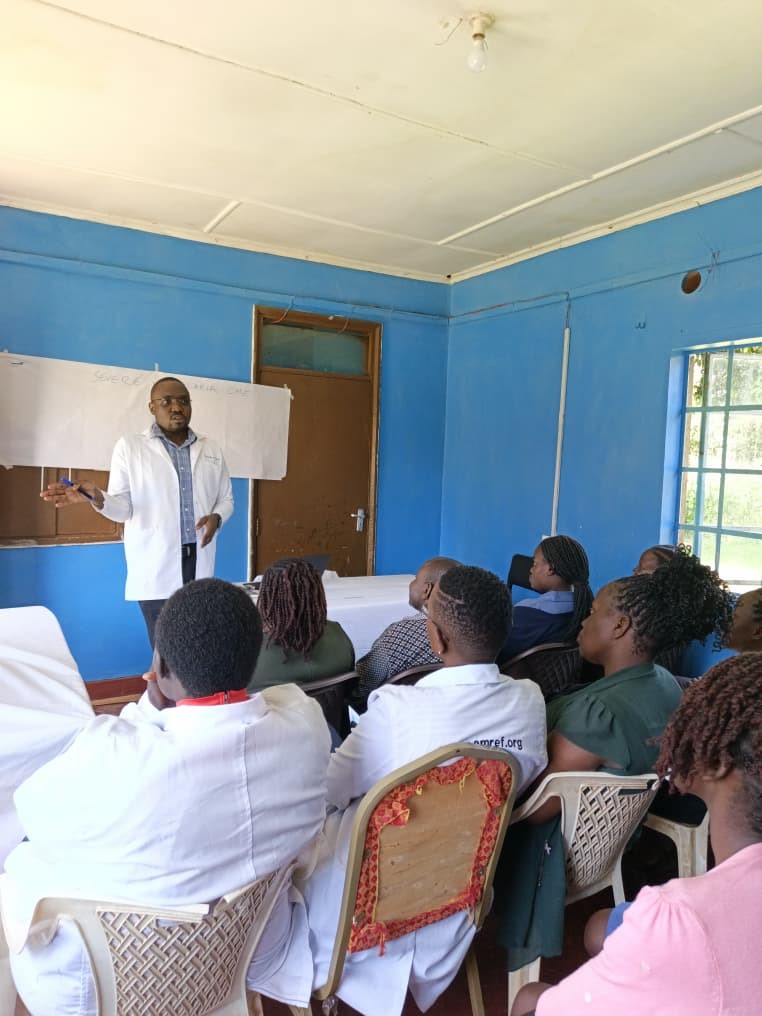
“Medicine is a constantly evolving field, with new evidence emerging every day. Without regular updates, even the most skilled clinicians risk applying outdated practices. The mentorship was therefore an invaluable experience,” noted Dr. Odhiambo. “Introducing change was not easy, especially in the face of attitudes among some healthcare workers, but the challenges strengthened me both personally and in my ability to manage others. As the Medical Superintendent, I see myself as an enabler. I do not depend on others to initiate or implement action plans. Rather, I lead from the front. This position comes with significant responsibility and respect, which in turn allowed me to drive improvements more efficiently and effectively.”
Since Dr. Odhiambo joined Khunyangu Sub-County Hospital in early 2025, not a single severe malaria patient has died, and his staff’s improved identification skills have helped drastically reduce monthly severe cases from an average of 36 cases per month between January and June to a low of seven cases per month between July and October.
Elizabeth Ongoma, a Registered Clinical Officer at Khunyangu Sub-County Hospital, further affirms the impact, saying, “I have gained key skills in identifying severe malaria cases, proper documentation, artesunate preparation and administration, and managing complications. Dr. Odhiambo is a hands-on person, guiding us on the step-by-step processes from history taking to treatment and ensures we clearly understand what to do. We previously referred the most severe malaria cases to other health facilities, but that has changed. His willingness to go beyond his duties demonstrates a leader with passion for quality patient care”
From training participant to a transformational clinical leader shaping systems of care, Dr. Odhiambo’s journey demonstrates the powerful impact of capacity building when paired with passion, leadership, and a commitment to saving lives. His story is a testament to how empowered health workers can transform their environments and make critical, often lifesaving, contributions to improving the quality of severe malaria case management in Kenya.
About Malaria No More
Malaria No More envisions a world where no one dies from a mosquito bite. Twenty years into our mission, our work has helped drive historic progress toward this goal. Now, we’re mobilizing the political commitment, funding, and innovation required to achieve one of the greatest humanitarian accomplishments of our time — ending malaria for good.