
Today at the Concordia Annual Summit in New York, alongside the 80th United Nations General Assembly, Malaria No More convened a panel discussion entitled “Building Markets Through Stronger Health Systems.” The session explored how tackling endemic diseases like malaria – a persistent barrier to productivity and economic stability in Africa – can unlock investment, reduce risk for businesses operating across the continent, and strengthen strategic partnerships – benefiting both Africa and the U.S.
Launched at the event, Malaria No More’s new report with the Corporate Council on Africa shows how ending malaria is one of the largest untapped business opportunities in the world – worth more than $4 trillion in potential economic output by 2030 by achieving global malaria reduction goals. It highlights that continued and increased U.S. government investment in African healthcare initiatives is the ultimate enabler of the “trade, not aid” policy, unlocking opportunities for American businesses that are ready to capitalize on Africa’s US$3 trillion economy.
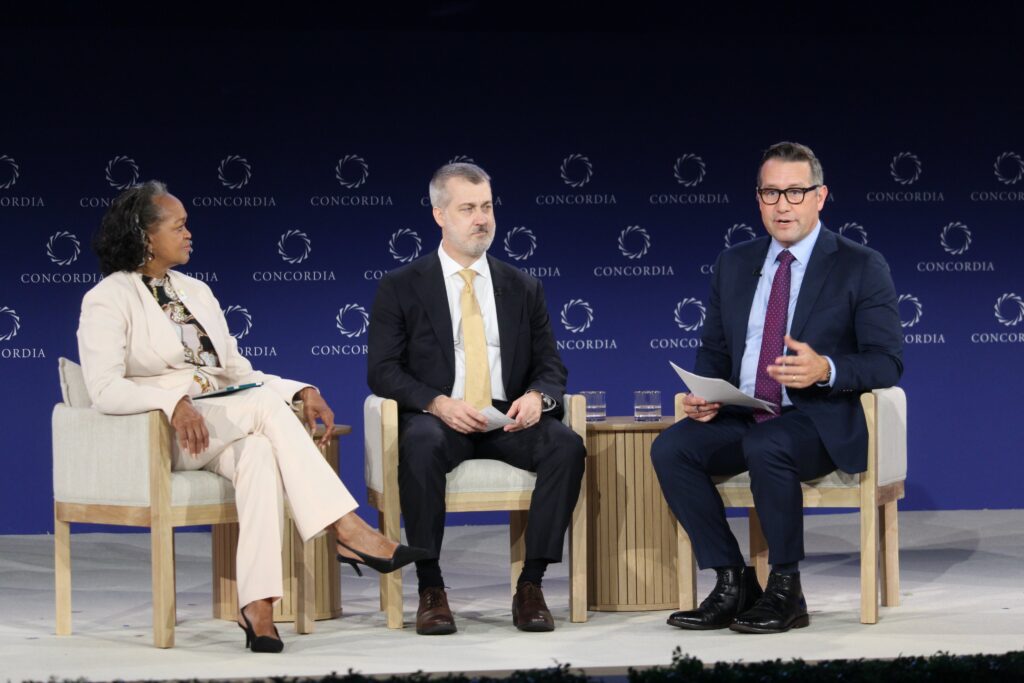
“We hope that policymakers will look at reducing malaria as an investment in their economy,” said Florizelle Liser, President and CEO of Corporate Council on Africa. “It is just as important, for example, as investing in roads and ports, because it is going to create an environment where people can be healthier, they can show up for work more often, they can be more productive. Companies can be more profitable, and more investment will be drawn to those countries.”


“We call out very specifically in the [State Department’s America First Global Health] strategy the role of private sector – whether that’s American innovation or the local private sector in Africa,” said Jeffrey Graham, Senior Bureau Official, Global Health Security and Diplomacy, U.S. Department of State. “It also lines up with what you’ve heard Secretary Rubio talk about, which is commercial diplomacy. Using the power of our diplomatic platform overseas, how do we do more in that space so we’re not just doing health response that may go on forever, but really figure out how to provide market opportunities in a way that eventually shifts the burden so that these countries have a more sustainable approach to their own health responses.”
“The malaria pipeline is bursting with transformative new technologies, many of them from American companies,” said Malaria No More CEO Martin Edlund. “By 2050, one in four people on the planet are going to be African, and 60 percent of the world’s youth are going to be African. As we talk to American companies and investors, they’re really thinking about Africa as a growth market.”
You can watch the full session at the Concordia Summit here:

About Malaria No More
Malaria No More envisions a world where no one dies from a mosquito bite. Twenty years into our mission, our work has helped drive historic progress toward this goal. Now, we’re mobilizing the political commitment, funding, and innovation required to achieve one of the greatest humanitarian accomplishments of our time — ending malaria for good.