
On the margins of the 79th World Health Assembly, Malaria No More hosted, “Accelerating Malaria Elimination Through Innovation,” convening ministers of health, global health leaders, innovators, and partners to explore the tools, technologies and partnerships needed to drive faster progress against malaria.
As resistance evolves, extreme weather reshapes transmission patterns, and countries work to sustain hard-won progress, the conversation focused on how next-generation tools — from mosquito technologies to novel therapeutics — can help countries stay ahead of malaria and move faster toward elimination.
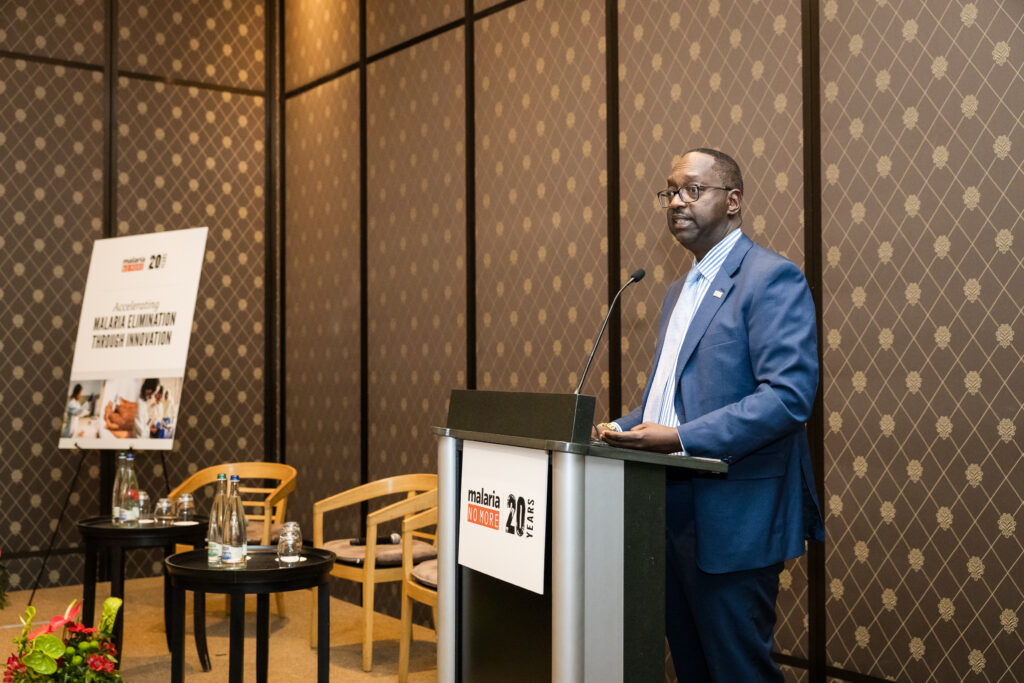
Opening the event, Dr. Daniel Ngamije Madandi, Director of the Global Malaria Program at the World Health Organization, underscored what countries will need to move innovation into impact. “We need faster, predictable, more coordinated policy regulatory pathways at the global and country-levels,” said Dr. Daniel Ngamije Madandi. “We also need sustainable financing, strong implementation support, and continued investment in operational learning, so that countries can adapt innovation effectively in real-world settings.”
Mosquito Technologies and the Future of Vector Control
Speakers emphasized that innovation alone will not be enough. Faster policy pathways, stronger regulatory systems, and strong investment will all be critical to helping countries adopt new tools at scale.
“There remains a significant misalignment between what companies like ours can do in the lab and in the field at scale,” said Grey Frandsen, CEO of Flyttr. “Countries want these types of technologies, and yet regulatory systems are immature and fragmented. Policy guidance needs to keep up to speed with the technology that we can develop.”


“I think what health ministers need to do is make the upfront investment, because in the end, you’ll be freeing up money that can be used for other things becoming more problematic for your country,” said H.E. Dr. Frank Anthony, Minister of Health, Guyana. “We are in a crunch because we still have infectious diseases, and we are now seeing a lot of noncommunicable diseases. So, if you can free up money from one area to invest in another, I think it makes good sense. That’s what we are trying to do. If people think we are on the right path, they can use any lessons from us.”
Novel Therapeutics and Staying Ahead of Resistance
The conversation then turned to what it will take to stay ahead of resistance, from scaling vaccines and strengthening community trust to developing next-generation medicines and ensuring new tools are accessible.
Dr. Linda Esso Endal, Director for the Fight Against Diseases, Epidemics and Pandemics, Ministry of Health, Cameroon noted, “Our plan is to scale vaccine administration, but also better understand misinformation and strengthen engagement around malaria and vaccination. If we can show our populations that it has an impact on disease prevalence and mortality, we can build confidence. In 2025, the mortality rate dropped by 37%, so we can see the real impact on the burden of disease in our country.”


“The next generation of medicines must cure resistant strains and be highly resistant to future ones,” said Martin Fitchet, CEO of Medicines for Malaria Venture. “They must be safe and effective in our most vulnerable populations, including pregnant women and young children, and they have to act on multiple parasites to slow transmission as well. That’s a huge challenge, but it’s achievable.”
Dr. Nicola Lister, Head of Global Health Medical Affairs at Novartis added, “Having a highly efficacious treatment is not enough. We can introduce it into a country and it can still sit on a shelf, never reaching the hands of patients unless we understand exactly what is needed. Building the healthcare system at the same time as building the science is really important.”
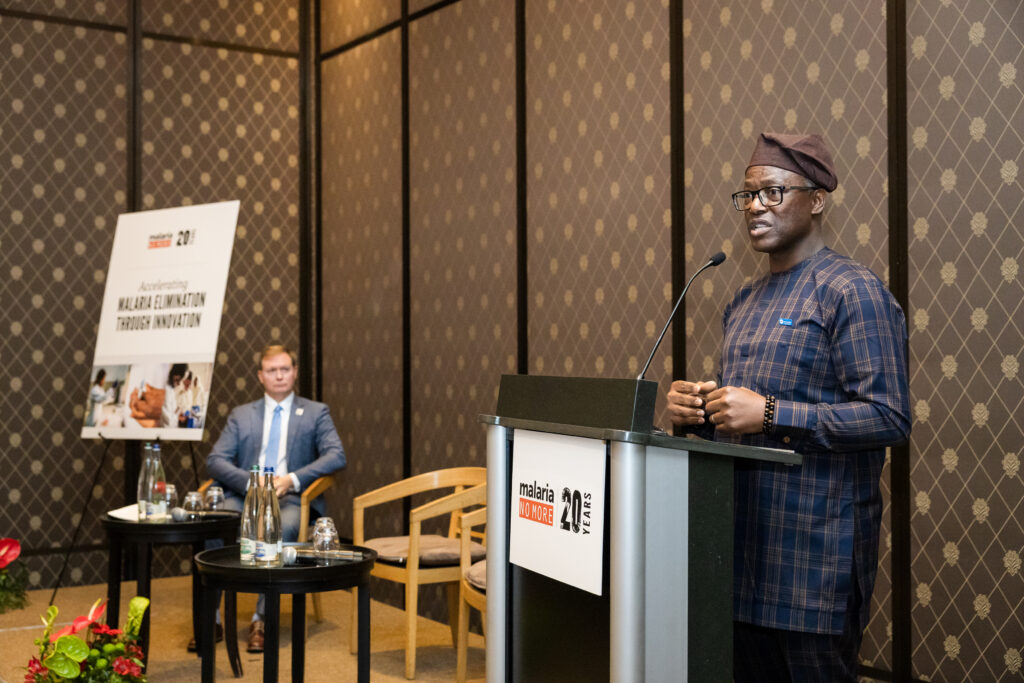
Dr. Michael Adekunle Charles, CEO of the RBM Partnership to End Malaria, closed the event by underscoring the importance of putting communities at the center of innovation. “We need to work together with communities and ensure they are helping lead some of these innovations,” said Dr. Michael Adekunle Charles. “Communities must be at the forefront. We need to see them not as beneficiaries, but co-designers. If they are not part of it, innovation will stall. Innovation will not be scaled up.”
About Malaria No More
Malaria No More envisions a world where no one dies from a mosquito bite. Twenty years into our mission, our work has helped drive historic progress toward this goal. Now, we’re mobilizing the political commitment, funding, and innovation required to achieve one of the greatest humanitarian accomplishments of our time — ending malaria for good.